A December 2025 USPS clarification about postmarks has raised questions about how mail ballots are dated and processed. For nonprofits supporting voters, especially in rural and remote communities, the implications are mostly about timing.
USPS has emphasized that this clarification does not change how ballots are handled or prioritized. But it does draw attention to how mail actually moves through the system at a time when election processing could use more clarity.
What Changed at USPS?
As of December 2025, USPS updated guidance in its Domestic Mail Manual to clarify what a postmark represents. It is now codified that a postmark reflects when mail is processed by USPS, not necessarily when it is dropped in a mailbox or handed to a postal worker.
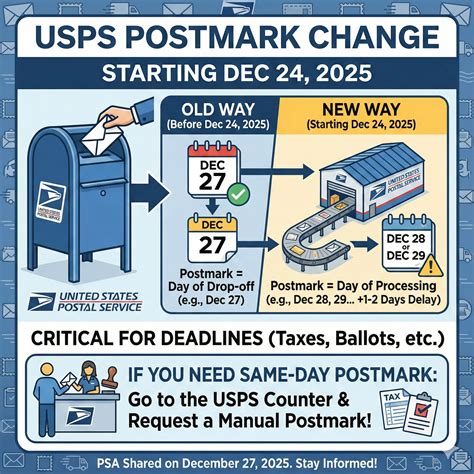
A handy infographic explaining the newly codified change that USPS promises has actually been in effect for multiple cycles.
USPS has said this update does not change how election mail is handled or prioritized. They also insist that this is a clarification of existing practice, not a change in service standards.
Still, the clarification matters because postmarks are used in many states to determine whether a mail ballot was submitted on time.
Why Processing Distance Matters
The codified rule comes at a time when across the country, USPS has consolidated mail processing into fewer regional facilities. As a result, mail often travels farther before it is processed and postmarked. This is where postmarks matter.
For voters in rural areas, tribal communities, and small towns, this can add time between when a ballot is mailed and when it receives a postmark. A ballot mailed close to Election Day may be on time but appear late based on the postmark alone.
This isn’t new, but the USPS clarification makes the impact clearer, and begs clearer steps forward for nonprofits serving rural communities.
What This Means for Nonprofits
For nonprofits serving rural and remote communities, the key issue is not whether mail voting is safe or valid. It is that longer processing timelines make early action more important.
Helping voters plan ahead is one of the most effective ways nonprofits can reduce confusion and support participation without taking on new responsibilities or risk.
Key Takeaways for Nonprofits
- Mailing election materials early matters more than ever
Regional processing consolidation means ballots may travel farther before being postmarked. Encourage voters to mail ballots as early as possible, ideally at least a week before deadlines. This includes mail related to primaries and paper voter registration or absentee request forms, which have state-specific deadlines as well. - Rural voters face longer mail timelines
Nonprofits serving rural, tribal, and remote communities should emphasize extra lead time for mail ballots, knowing that the ongoing consolidation of processing centers means delays are a matter of when, not if. - Postmarks reflect processing, not drop-off
A ballot can be mailed on time but postmarked later. This is why last-minute mail voting can be risky in states that rely on postmarks. - There are simple ways to reduce risk
Voters can ask for a hand-stamped postmark at a post office counter or use ballot drop boxes and in-person return options where available.
The Bottom Line
Mail voting remains a secure and widely used option, and USPS continues to prioritize election mail as first-class mail. The postmark clarification does not change voting rules or voter eligibility.
What it does reinforce is the value of planning ahead. For nonprofits supporting voters, especially in communities where mail travels farther to be processed, encouraging early action helps ensure that eligible ballots are counted.
This post draws on analysis from the Campaign Legal Center’s more detailed explainer, “Here’s What the New USPS Rule Means for Voting by Mail | Campaign Legal Center,” which provides additional detail on the USPS postmark clarification.